After Midnight: What NOC Shift Nurses See That Others Don’t
Sep 30, 2026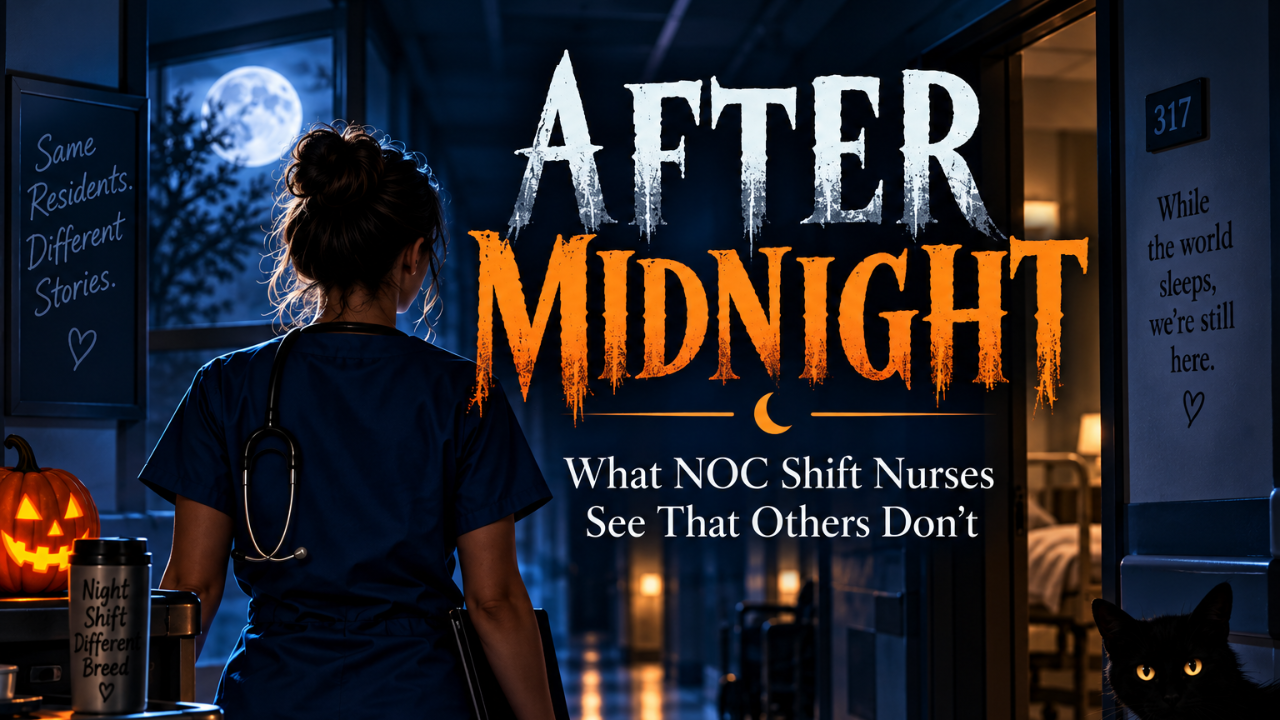
There are two versions of a nursing facility: the one everyone sees during the day—and the one that wakes up after midnight.
The lights dim. The visitors leave. Administration goes home. The therapy gym is empty. Call lights slow down, televisions become quieter, and eventually the hallways settle into that unmistakable stillness of NOC shift.
And that’s when you know better than to get too comfortable.
Because a nursing facility at 2:00 a.m. is a completely different place.
The resident who was perfectly content at dinner may now be dressed and waiting for a bus that hasn’t existed in 40 years. Someone who sleeps through every night suddenly won’t stay in bed. A call light comes on for the fifth time—but this time, something about the resident is different.
And somewhere down the hallway, you hear a sound.
You stop.
Listen.
And start walking.
Welcome to NOC shift.
The Residents You Meet After Midnight
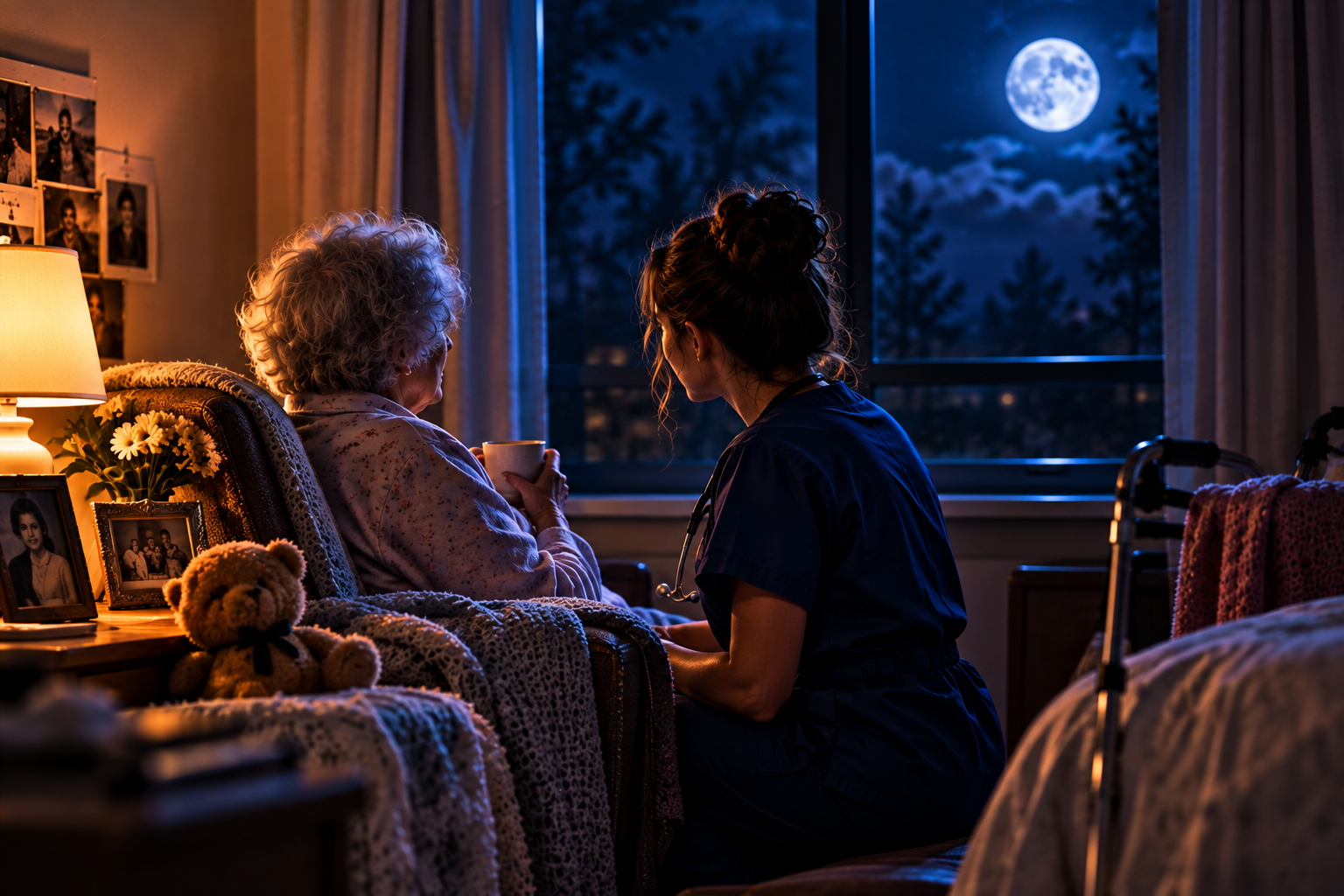
Day shift knows Mrs. Johnson as the woman who sits near the window, attends activities and never misses bingo.
NOC shift knows that around 1:30 a.m., Mrs. Johnson sometimes packs her belongings because she needs to “get home before her mother worries.”
Both versions of Mrs. Johnson are real.
That’s one of the strange things about working nights.
When the visitors disappear, the televisions turn off and the stimulation of the day fades, residents sometimes show you an entirely different side of themselves.
Some wander.
Some become frightened.
Some remember things from decades ago as though they happened yesterday.
Some tell stories you’ve never heard before.
And some simply want someone to sit beside them for a few minutes because nighttime feels different when you no longer recognize where you are.
NOC nurses get to know those versions too.
When the Hallway Is Too Quiet
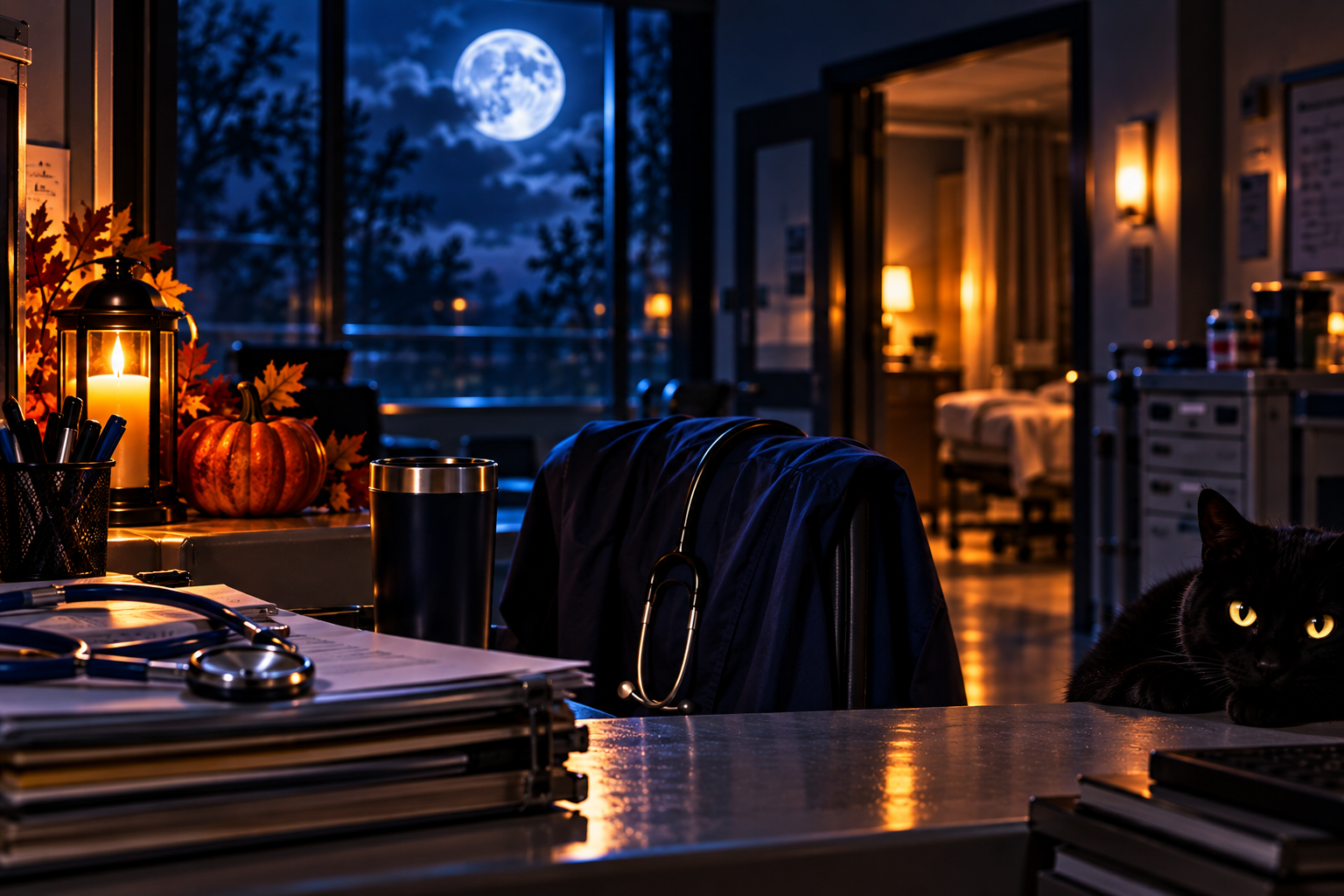
Every NOC nurse knows there are different kinds of quiet.
There’s everyone-is-finally-asleep quiet.
And then there’s…
Why is it so quiet?
You look up from the computer.
Nothing.
No call lights.
No alarms.
No CNA walking past.
You haven’t heard from the resident who normally calls every twenty minutes.
And suddenly the silence itself has your attention.
So you make a round.
Room 12—sleeping.
Room 14—sleeping.
Room 16—
Well.
There goes the quiet night.
NOC shift teaches you quickly that sometimes the resident you haven’t heard from is the resident you need to check.
The Things Day Shift Never Sees
At night, the building has fewer distractions—and sometimes fewer places for problems to hide.
That’s when you discover the oxygen tubing disconnected behind the bed.
The resident who has figured out how to silence the bed alarm.
The roommate quietly helping another resident climb out of bed.
The resident who has somehow removed an entire dressing.
The call light cord that is mysteriously six feet away from the person who needs it.
The hearing aids sitting in a cup you really hope contains only water.
And, of course, the resident standing beside the bed who absolutely insists:
“I did NOT fall.”
While sitting on the floor.
NOC nurses see things that would be difficult to explain to anyone who hasn’t worked NOC.
Sometimes all you can do is look at your CNA.
Your CNA looks at you.
Neither of you says a word.
And somehow you’ve had an entire conversation.
Then Comes the 2 A.M. Plot Twist
Every NOC shift has the potential for one.
The night is going suspiciously well.
Med pass is finished.
Treatments are done.
Charting is almost caught up.
You’ve even started thinking:
I might actually leave on time.
Never think that.
Because somewhere around 2:17 a.m., the universe hears you.
A resident falls.
Someone develops chest pain.
A blood sugar doesn’t make sense.
A resident who was fine an hour ago suddenly isn’t.
An IV comes out.
The pharmacy hasn’t delivered something you need.
Or the CNA approaches the nurses’ station and begins the sentence no night nurse wants to hear:
“Can you come look at something?”
There goes the rest of your night.
The On-Call Provider Knows Your Voice
Calling someone at 2:30 a.m. creates a very particular kind of relationship.
You know they’re asleep.
They know you know they’re asleep.
But the resident didn’t schedule the problem for business hours.
So you make the call.
Sometimes the conversation is straightforward.
Other times you hear:
“Can this wait until morning?”
And there you are—in a quiet nurses’ station, looking back toward the resident’s room and deciding how firmly you’re going to answer that question.
There are parts of nursing that happen in classrooms.
And then there are parts you learn at 2:30 in the morning.
The Night Crew Becomes Its Own Little World
There’s something different about a NOC crew.
Maybe it’s because there are fewer people in the building.
Maybe it’s because everyone knows there isn’t an endless supply of backup coming down the hallway.
Whatever the reason, you learn each other’s rhythms.
You know which CNA will tell you immediately when something feels off.
You know who can calm the resident nobody else can redirect.
You know who will appear in the doorway before you’ve even finished saying, “I need help.”
And you learn to appreciate the sentence:
“I already checked on them.”
At 3:00 a.m., those may be the most beautiful five words in the English language.
And Then, Somehow, It’s Morning
This may be the strangest part of NOC shift.
You’ve spent eight hours inside an entirely different version of the building.
There may have been a fall.
A provider call.
A resident wandering the hallway looking for a husband who died years ago.
Someone crying.
Someone laughing.
Someone who frightened you for a few minutes.
Someone who just needed reassurance.
Maybe you spent half the night chasing one problem after another.
And then—
the lights come on.
Breakfast carts appear.
The front doors start opening.
Day shift walks in carrying coffee.
Residents who kept you busy all night suddenly look completely innocent.
And inevitably someone asks:
“How was your night?”
You look around the brightly lit nurses’ station.
Where would you even begin?
So you give the answer NOC nurses have been giving for generations:
“It was a night.”
What Happens After Midnight…
NOC shift doesn’t always get the audience that daytime nursing does.
There aren’t as many visitors watching.
There aren’t as many people walking through the building.
Some of the most meaningful moments will never make it into a meeting, a report or even a nursing note.
The resident whose blanket you fixed one more time.
The confused woman you walked back to bed.
The CNA who noticed something wasn’t right.
The room you checked because the silence bothered you.
The resident who whispered “thank you” when nobody else was awake to hear it.
That’s the part of NOC shift people don’t always see.
When the building goes dark, nursing doesn’t become quieter.
It simply becomes different.
And somewhere tonight, while most of the world is sleeping, a nurse will look down a dimly lit hallway, hear something that doesn’t sound quite right and think:
“Well… here we go.”
Welcome to NOC shift. 🌙
Take the next step with continuing education designed for LVNs who serve with purpose.